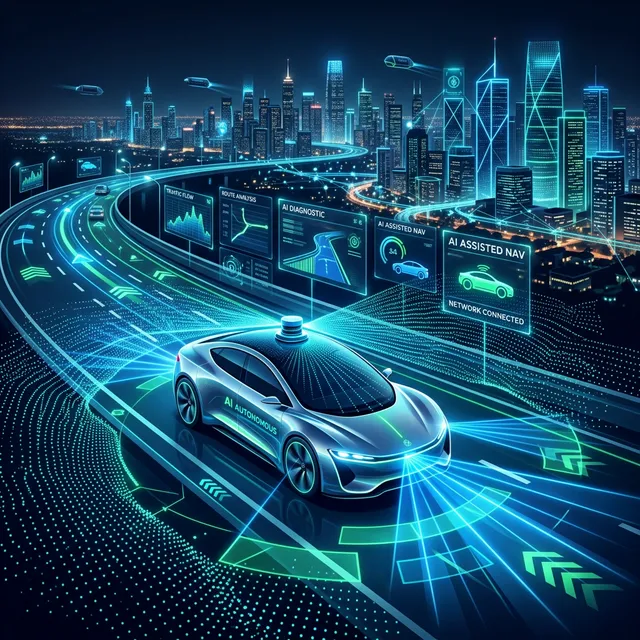
I have been hearing that self-driving cars are "five years away" for approximately fifteen years. In 2011, it was five years away. In 2016, it was five years away. In 2021, it was five years away. In 2026, the honest answer is more nuanced and more interesting than "five years away": self-driving cars are simultaneously here and not here, functional and not functional, safe and not safe—depending entirely on what you mean by "self-driving," where you mean "here," and what standard you apply to "safe." The gap between the technology's genuine recent progress and the public's understanding of that progress—shaped by years of over-promising from automakers and technology companies—is the most consequential communication failure in the history of consumer technology.
To understand where self-driving actually stands in 2026, you need to understand the taxonomy of driving automation—the SAE International's six-level classification system that the industry uses internally but rarely explains clearly to the public. This classification is not merely technical jargon; it is the key to understanding why "self-driving" headlines are simultaneously true and misleading:
The Levels of Autonomy: Why Words Matter

Level 0-2 (Driver Assistance): The vehicle can perform specific driving tasks (steering, acceleration, braking) under specific conditions, but the human driver remains fully responsible for monitoring the driving environment and intervening when necessary. Tesla's Autopilot, despite its name, is a Level 2 system: it can maintain lane position and follow the car ahead on highways, but it requires the human driver to maintain attention and be ready to take control at any moment. Most modern cars with adaptive cruise control and lane-keeping assist are Level 2. The human is driving, with technological assistance.
Level 3 (Conditional Automation): This is the critical threshold. At Level 3, the vehicle can drive itself under specific conditions (typically highway driving below a certain speed), and the human driver can disengage their attention from the driving task during those conditions. The human must be ready to resume control when the system requests it (a "take-over request"), but they are not required to monitor the road continuously. This distinction—legal responsibility shifts to the vehicle during automated driving periods—is the fundamental difference between a sophisticated driver-assist system and an actual self-driving system. Mercedes-Benz's DRIVE PILOT, available in Germany and soon in the United States, is the first commercially available Level 3 system on a production car. It operates on highways at speeds up to 60 km/h in congested traffic conditions—essentially, traffic jams. The driver can read a book, check their phone, or watch a movie on the car's display while the system drives. If the system encounters a situation it cannot handle, it provides a 10-second warning for the driver to resume control.
Level 4 (High Automation): The vehicle can drive itself in a defined geographic area (geofenced) without any human intervention or attention. There may not even be a steering wheel or pedals. The vehicle handles all driving tasks, including emergency situations, within its operational domain. Waymo's robotaxi service in Phoenix and San Francisco operates at Level 4: the vehicles navigate complex urban environments—intersections, pedestrians, construction zones, double-parked vehicles—without a human safety driver behind the wheel. Riders summon the car via an app, ride in the back seat, and the car drives itself to the destination. This is genuine self-driving by any reasonable definition—and it is operational today, available to paying customers, in specific cities.
Level 5 (Full Automation): The vehicle can drive itself anywhere a human could drive, in any conditions, with no human intervention ever required. There is no steering wheel, no pedals, no expectation that a human passenger could or should drive. Level 5 does not exist in any commercially available or publicly deployed vehicle, and there is no consensus on when it will.
What's Working in 2026: The State of Play
Waymo is the clearest success story—and even it is qualified. Waymo's robotaxi service in Phoenix has been operating without human safety drivers since 2023, has completed millions of autonomous rides, and has a safety record that appears to be better than the average human driver (fewer accidents per mile driven, and the accidents that have occurred have generally been caused by other human drivers hitting the Waymo vehicle). The service has expanded to San Francisco and is operating in Los Angeles and Austin. Users report an experience that is simultaneously boring and extraordinary: boring because the car drives competently and unremarkably, extraordinary because there is nobody in the front seat. The rides work. The technology functions.
But Waymo's success comes with qualifications that receive less attention. The vehicles are extremely expensive—each one carries a sensor suite (lidar, cameras, radar) that costs tens of thousands of dollars, on top of a base vehicle cost of approximately $100,000. The operational domain remains limited to pre-mapped urban areas in cities with favourable weather (Phoenix's sunny, dry climate presents far fewer challenges than, say, Mumbai's monsoon season or northern Europe's snow and ice). The vehicles occasionally behave in ways that are safe but sub-optimal—stopping for extended periods at intersections when the right-of-way is unclear, routing through residential neighbourhoods to avoid complex traffic situations, or struggling with construction zones where lane markings conflict with temporary traffic patterns. These behaviours are not dangerous, but they illustrate the gap between "can drive safely" and "drives as well as a skilled human in all situations."
The India Question: Will Self-Driving Work Here?
India's driving environment presents challenges that are qualitatively different from the environments where autonomous vehicles have been successfully deployed. Indian roads feature: mixed traffic (cars, trucks, buses, autorickshaws, motorcycles, bicycles, pedestrians, cattle, and occasional elephants sharing the same road space), minimal lane discipline (lane markings are suggestions, not constraints), aggressive and unpredictable driver behaviour (horn-first, brake-later driving culture), pedestrians crossing at any point rather than at designated crossings, and infrastructure variability (road quality, signage, and lighting vary enormously between national highways and local roads, and even within the same city).
The honest assessment is that Level 4 autonomous driving in Indian city traffic is a substantially harder problem than Level 4 driving in Phoenix or San Francisco, and it is likely at least a decade away from viable deployment. However, specific applications of autonomous driving technology are more immediately relevant: Level 2 driver assistance (already available in premium vehicles sold in India through Tesla, Mercedes, BMW, and Hyundai/Kia ADAS systems), highway autopilot for controlled-access expressways (India's growing network of national expressways provides relatively structured driving environments where Level 3 systems could function), and autonomous driving in controlled environments (mining operations, port logistics, agricultural applications, factory campuses).
India's vehicle safety landscape is also relevant: India accounts for approximately 11% of global road traffic deaths despite having roughly 3% of global vehicles—a fatality rate that reflects infrastructure deficiencies, enforcement gaps, and driving behaviour that autonomous vehicle technology could, in principle, dramatically reduce. The safety case for autonomous driving is actually stronger in India than in countries with already-low accident rates, because the baseline is so much worse.
Frequently Asked Questions (FAQs)
Are self-driving cars safer than human drivers?
The data suggests: probably yes, in the specific environments where they operate, with significant caveats. Waymo's published safety data shows fewer collisions per million miles driven than the average human driver in the same geographic areas. However: the autonomous vehicles operate in pre-mapped environments they know well, during operating hours that avoid the most dangerous driving times (late night, when alcohol-impaired driving peaks), and in weather conditions they are designed for. Comparing their safety record to the average human driver—which includes drunk drivers, distracted teen drivers, sleep-deprived drivers, and drivers on unfamiliar roads—is not an apples-to-apples comparison. The more relevant comparison is between autonomous vehicles and attentive, sober human drivers in the same conditions—and on this comparison, the evidence is less conclusive. Autonomous vehicles are almost certainly safer than the average human driver; whether they are safer than the best human drivers remains an open question.
When will I be able to buy a fully self-driving car?
You cannot buy a Level 4 or Level 5 self-driving car today, and realistically you will not be able to for several years. What you can buy is an increasingly capable Level 2 system (Tesla Autopilot, GM Super Cruise, Ford BlueCruise, BMW Highway Assistant) that handles specific highway driving tasks while requiring your supervision. Mercedes DRIVE PILOT (Level 3) is available in Germany and expanding to other markets but operates only in highway traffic jams below 60 km/h. The more likely near-term future is not car ownership but robotaxi services—you will not own a self-driving car but will summon one when needed, similar to current ride-hailing services but without a human driver. Waymo, Cruise (GM), and Baidu's Apollo are already operating or testing such services. In India specifically, self-driving car ownership is likely at least 10-15 years away; robotaxi services in controlled environments (tech parks, airports, new smart cities) may arrive sooner, perhaps 5-8 years.
What happens if a self-driving car causes an accident? Who is liable?
This is the most consequential legal question in automotive history, and the answer is still evolving. For Level 2 systems (where the human must supervise), liability generally remains with the human driver—you are responsible because you were supposed to be paying attention. For Level 3 systems (Mercedes DRIVE PILOT), Mercedes has taken the historic step of accepting liability for accidents that occur while the system is in control—a legal commitment that no other manufacturer has matched and that fundamentally shifts the risk calculus. For Level 4 systems (Waymo robotaxis), liability falls on the operating company as the de facto "driver." India's Motor Vehicles Act does not currently contemplate autonomous vehicles, and regulatory frameworks for AV liability, insurance, and accident investigation are still being developed. The lack of legal clarity is one of the significant barriers to AV deployment in India.

Comments (0)
Be the first to share your thoughts on this article.