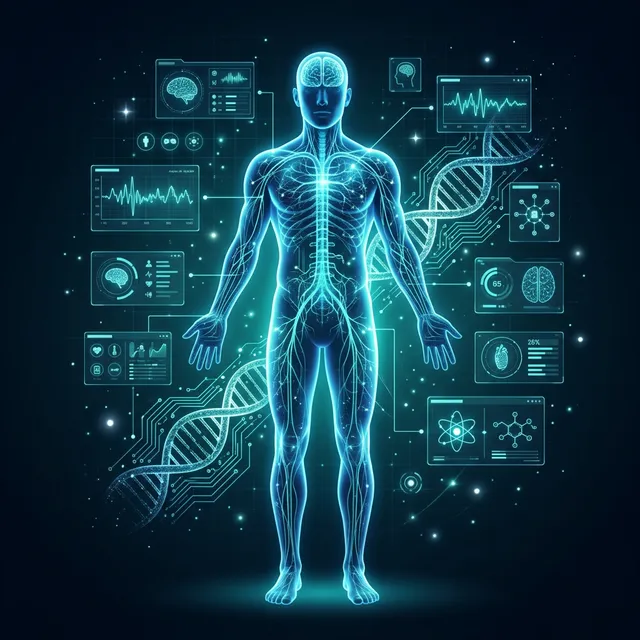
The phrase "AI will revolutionize healthcare" has been repeated so frequently and with such breathless enthusiasm that it has achieved a paradoxical status: it is simultaneously obviously true and almost completely meaningless. Of course AI will transform healthcare—computational systems that can process medical imaging, genomic data, electronic health records, and clinical literature at speeds and scales no human physician can match will inevitably change how diseases are detected, diagnosed, treated, and prevented. The interesting question is not whether this transformation will occur but how, where, and for whom—and the honest answers to these questions are considerably more nuanced, more geographically variable, and more ethically complicated than the technology evangelists typically acknowledge.
I write this as someone who has spent three years reporting on AI healthcare deployments in India, the United States, and Southeast Asia. The variation in what "AI in healthcare" actually means across these contexts is enormous. In a well-resourced American hospital, AI means a sophisticated radiology assistant that helps detect subtle findings on MRI scans. In a primary health centre in rural Rajasthan, AI means a smartphone app that helps an auxiliary nurse midwife screen for diabetic retinopathy because the nearest ophthalmologist is 200 kilometres away. Both are "AI in healthcare." They share almost nothing in common except the underlying mathematical framework and the label we attach to it.
Diagnostic Imaging: Where AI Is Already Working

Medical imaging is the domain where AI has achieved the most unambiguous, clinically validated, regulatory-approved success. The reason is structural: medical images (X-rays, CT scans, MRI scans, retinal photographs, pathology slides) are standardised data formats that can be processed by convolutional neural networks—the same category of deep learning architecture that powers facial recognition and object detection in consumer photography. The technical problem—detecting patterns in images that indicate disease—maps cleanly onto a capability that AI systems have been demonstrating since the early ImageNet competitions of the 2010s.
The results are genuinely impressive and increasingly well-documented. AI systems can detect diabetic retinopathy from retinal photographs with sensitivity and specificity that matches or exceeds trained ophthalmologists. AI can identify suspicious lung nodules on chest CT scans with fewer false negatives than the average radiologist reading alone. AI can detect metastatic breast cancer cells in lymph node pathology slides with an accuracy that reduces the miss rate significantly when used as a "second reader" alongside the human pathologist. These are not laboratory demonstrations or press release claims—they are findings from randomised clinical trials published in peer-reviewed medical journals and supported by regulatory approvals from the US FDA, the European CE marking authority, and India's CDSCO.
The practical impact, however, varies dramatically by healthcare context. In a tertiary hospital in Mumbai or Delhi that already has access to trained radiologists, AI diagnostic tools function as productivity enhancers and quality assurance mechanisms—they accelerate reading times and catch occasional errors, but the baseline quality of care is already high. In a district hospital in Jharkhand or a primary health centre in rural Bihar, where there is no radiologist on staff and diagnostic images must be sent to a distant urban centre for interpretation (a process that can take days or weeks), AI diagnostic tools have the potential to transform the fundamental availability of diagnostic capability. The most impactful applications of AI in healthcare are not the ones that marginally improve already-excellent care; they are the ones that provide basic diagnostic capability where none previously existed.
Drug Discovery: The Promise That's Taking Longer Than Expected
AI-driven drug discovery was one of the most hyped applications of machine learning in the early 2020s, with multiple startups (Insilico Medicine, Recursion Pharmaceuticals, Exscientia) and pharmaceutical giants (Pfizer, AstraZeneca, Novartis) announcing AI-powered drug discovery programmes that promised to dramatically accelerate the traditionally decade-long, billion-dollar process of developing new drugs. The thesis was compelling: AI can screen millions of potential molecular structures computationally, predict their binding affinity to disease targets, optimise their pharmacokinetic properties (absorption, distribution, metabolism, excretion), and identify promising drug candidates in months rather than years.
Five years into this experiment, the results are genuine but sobering. AI has successfully accelerated the identification phase—finding molecular structures that show promise against a given disease target. Several AI-discovered drug candidates have entered clinical trials, which is a meaningful milestone. However, the clinical trial process itself—the Phase I, Phase II, and Phase III trials that determine whether a drug is safe and effective in actual human patients—cannot be accelerated by AI because it is fundamentally constrained by biology: you must wait months or years to observe whether a drug produces therapeutic benefit, side effects, or long-term complications in human subjects. AI can generate better candidate molecules faster, but it cannot make human biology respond to those molecules faster.
The honest assessment is that AI is transforming the preclinical phase of drug discovery (reducing timelines from 4-5 years to 1-2 years for candidate identification) while having minimal impact on the clinical trial phase (which still requires 5-8 years for most drugs). The net effect is meaningful but not revolutionary: total drug development timelines may be reduced from 12-15 years to 8-12 years. This is a significant improvement that will save billions of dollars and potentially bring treatments to patients years earlier—but it is not the order-of-magnitude transformation that the most enthusiastic predictions suggested.
Electronic Health Records: The Unsexy Application That Matters Most
The application of AI that will likely have the largest aggregate impact on healthcare quality is the least visually dramatic: the analysis of electronic health records (EHRs) to identify patterns, predict deterioration, flag medication interactions, and support clinical decision-making. This is not the kind of AI application that generates headlines or TED talks—it is computational infrastructure work that operates invisibly behind clinical workflows—but its potential impact on patient safety and healthcare efficiency is enormous.
Consider medication errors: the World Health Organization estimates that medication-related errors cause at least one death every day and injure approximately 1.3 million people annually in the United States alone. Many of these errors are preventable—they result from drug interaction oversights, dosing errors in patients with impaired kidney function, allergic reactions to medications recorded in the patient's file but missed by the prescriber. An AI system that cross-references every new prescription against the patient's complete medication list, allergy history, laboratory results, and genetic profile (where available) can flag potential interactions and contraindications in real time, before the prescription is filled. This is not speculative future technology—several EHR systems already incorporate basic versions of this functionality, and AI enhancement promises to make these alerts substantially more accurate (fewer false positives that clinicians learn to ignore) and more actionable (providing specific alternative recommendations rather than generic warnings).
Predictive deterioration models—AI systems that analyse continuous vital sign monitoring data, laboratory results, and clinical notes to predict patient deterioration hours before it becomes clinically obvious—have demonstrated genuine clinical value in intensive care settings. A patient whose vital signs are individually within normal ranges but whose pattern of change (gradually increasing heart rate, subtly decreasing blood pressure, slowly declining urine output) follows a trajectory that statistically precedes septic shock or respiratory failure can be identified and treated proactively rather than reactively. Several studies have shown that early warning AI systems reduce unexpected ICU transfers, cardiac arrests, and in-hospital mortality by enabling earlier intervention.
The Indian Healthcare AI Landscape
India's AI healthcare ecosystem occupies a unique position globally because it combines several characteristics that exist nowhere else simultaneously: an enormous patient population (1.4 billion people generating vast quantities of clinical data), severe physician shortages (India has approximately 0.7 physicians per 1,000 population, compared to 2.6 in the US and 4.3 in Germany), extreme geographic disparities in healthcare access (world-class hospitals in metropolitan cities coexisting with primary health centres lacking basic diagnostic equipment in rural areas), and a rapidly growing digital health infrastructure (the Ayushman Bharat Digital Mission, which aims to create digital health IDs and electronic health records for all Indian citizens).
Indian AI healthcare startups—Niramai (AI-based breast cancer screening using thermal imaging), Qure.ai (AI-powered chest X-ray interpretation), SigTuple (AI analysis of blood samples and retinal scans), and several others—have developed solutions specifically designed for the Indian healthcare context: products that work on low-cost hardware, function with limited internet connectivity, integrate with India's public health infrastructure, and address the specific disease burden of the Indian population (tuberculosis screening, diabetic retinopathy detection, malaria diagnosis) rather than the disease profiles that dominate Western AI healthcare research.
Frequently Asked Questions (FAQs)
Will AI replace doctors?
No—and this framing fundamentally misunderstands both AI capability and the nature of medical practice. AI will replace specific tasks that doctors currently perform: reading routine imaging studies, screening laboratory results, generating preliminary differential diagnoses. But medical practice involves clinical judgment (integrating uncertain information across multiple domains), patient communication (explaining diagnoses, discussing treatment options, providing emotional support), physical examination (which no AI system can perform), procedural skills (surgery, intubation, central line placement), and ethical decision-making (end-of-life care, resource allocation, informed consent). These are capabilities that AI does not possess and is not close to possessing. The accurate prediction is not "AI will replace doctors" but "doctors who use AI will replace doctors who don't"—the tool augments the practitioner rather than substituting for them.
Is AI-assisted diagnosis safe? Can I trust it?
AI diagnostic systems that have received regulatory approval (FDA clearance, CE marking, CDSCO approval) have been validated through clinical trials that demonstrate performance meeting or exceeding specific benchmarks. However, "safe" does not mean "infallible." AI diagnostic tools have error rates—they produce both false positives (identifying disease where none exists, potentially leading to unnecessary follow-up procedures) and false negatives (missing disease that is present, potentially leading to delayed treatment). This is identical to human diagnostic error rates—radiologists miss findings, pathologists misclassify samples, clinicians overlook diagnoses. The safety argument for AI is not perfection but improvement: when AI is used as a complementary tool alongside human expertise, the combined error rate is lower than either alone. The appropriate trust model is "AI as a highly capable second opinion," not "AI as a replacement for clinical judgment."
How will AI in healthcare affect India's doctor shortage?
AI will not produce more doctors, but it can dramatically amplify the effective capacity of the existing healthcare workforce. If an AI system can accurately screen chest X-rays for tuberculosis, a primary health centre nurse can order the X-ray, the AI can provide the initial reading, and the physician only needs to review the AI-flagged positive cases rather than every image—potentially increasing the physician's effective diagnostic throughput by 5-10x. Similarly, AI-powered chatbots and triage systems can handle routine health queries (medication timing, symptom assessment for common conditions, appointment scheduling), freeing physicians to spend their limited time on cases that genuinely require human clinical expertise. This "task-shifting" model—using AI to handle routine tasks and reserving physician time for complex cases—is the most realistic pathway to addressing India's healthcare access crisis without waiting decades for medical education to produce sufficient additional doctors.

Comments (0)
Be the first to share your thoughts on this article.