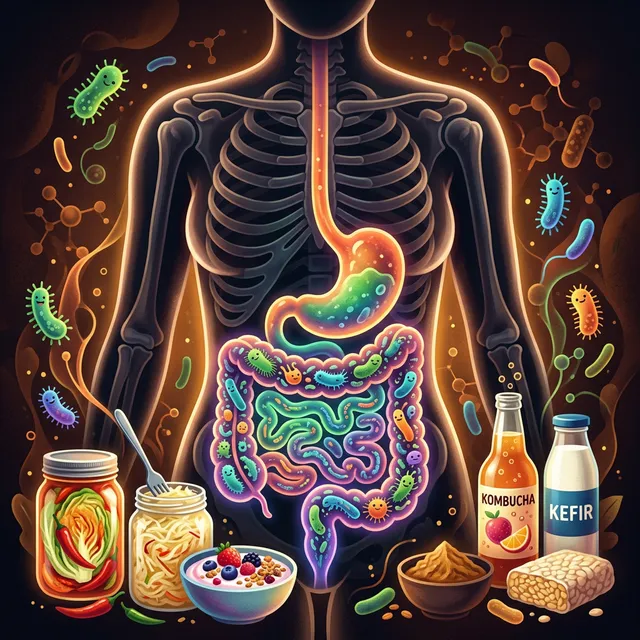
Your gut contains approximately 38 trillion microorganisms—bacteria, fungi, viruses, and archaea—that collectively weigh about 2 kilograms and constitute what is arguably the most important organ in your body that you did not know you had until the scientific community started paying attention to it in the early 2010s. The gut microbiome has since become one of the most intensely researched areas in biomedical science, one of the most aggressively marketed wellness trends, and one of the domains where the gap between what science actually knows and what the supplement industry claims is most disturbingly wide. What follows is an honest attempt to bridge that gap—to explain what the current evidence actually supports, what remains speculative, and what the ₹500-crore probiotic industry would rather you not examine too carefully.
The basic science is genuinely fascinating. The microbial community in your gut is not a passive collection of organisms that happen to live inside you. It is an active, dynamic ecosystem that performs metabolic functions your own cells cannot perform (breaking down certain dietary fibres, synthesising certain vitamins, metabolising certain drugs), communicates with your immune system (approximately 70% of your immune cells are located in the gut-associated lymphoid tissue, directly interacting with the microbial community), and influences your nervous system through the gut-brain axis (a bidirectional communication pathway connecting the enteric nervous system in your gut to the central nervous system in your brain, mediated by the vagus nerve, microbial metabolites, and immune signalling molecules). This is not speculative science—it is well-established physiology supported by thousands of peer-reviewed studies.
What Science Actually Knows

Diversity matters more than specific species. The single most robust finding in microbiome research is that microbial diversity—the number of different species present in your gut—is positively associated with health outcomes. People with higher microbial diversity tend to have lower rates of inflammatory bowel disease, metabolic syndrome, obesity, and allergic conditions. People with reduced microbial diversity (caused by antibiotic use, limited dietary variety, chronic stress, or certain medical conditions) tend to have higher rates of these conditions. This finding is consistent across populations, geographies, and study designs, and it is the foundation for the most reliable dietary advice that microbiome science has produced: eat a diverse range of plant foods to support a diverse microbial community.
Fibre is the primary fuel for your gut microbes. Dietary fibre—the indigestible carbohydrate components of plant foods—is the primary energy source for the beneficial bacteria in your gut. When gut bacteria ferment dietary fibre, they produce short-chain fatty acids (SCFAs)—particularly butyrate, propionate, and acetate—that serve as the primary energy source for the cells lining your colon, reduce gut inflammation, strengthen the intestinal barrier, and influence systemic metabolic processes including insulin sensitivity and fat storage. The mechanism is direct and well-understood: eat more fibre → gut bacteria produce more SCFAs → colon health improves → systemic inflammation decreases. The recommended fibre intake is 25-35 grams per day; the average Indian consumption is approximately 15-20 grams per day; and this gap represents the single most impactful dietary intervention for gut health that does not require any supplement or special product—just more vegetables, fruits, legumes, and whole grains.
Fermented foods provide beneficial bacteria. Naturally fermented foods—yogurt (dahi), idli/dosa batter (fermented rice and urad dal), kanji (fermented carrot water), pickles (naturally fermented, not vinegar-pickled), kimchi, sauerkraut, kombucha, kefir—contain live bacteria that, when consumed regularly, contribute to gut microbial diversity. The evidence for fermented foods is stronger than the evidence for probiotic supplements, for a practical reason: fermented foods deliver bacteria in a food matrix that includes prebiotics (fibre that feeds the bacteria), organic acids (that modify gut pH to favour beneficial bacteria), and other bioactive compounds that supplements do not provide. A daily serving of dahi or a regular intake of fermented foods (idli, dosa, kanji) provides a more comprehensive microbial input than a probiotic capsule, at a fraction of the cost.
What Science Does NOT Know (Despite What the Industry Claims)
We cannot precisely prescribe a "healthy" microbiome. The microbiome is individually unique—no two people have the same microbial composition, and the composition varies by geography, diet, genetics, age, antibiotic history, and dozens of other factors. There is no single "ideal" microbiome that everyone should strive for. The probiotic industry's implicit claim—that specific strains of bacteria, delivered in capsule form, will improve your gut health—is at best oversimplified and at worst misleading. Different people's guts respond differently to the same probiotic strain, and the factors that determine whether a given probiotic will colonise your gut (or pass through without establishing) are poorly understood.
The gut-brain connection is real but not fully mapped. The gut-brain axis is genuine science: gut bacteria produce neurotransmitters (serotonin, dopamine, GABA), influence systemic inflammation that affects brain function, and communicate with the brain through the vagus nerve. However, the leap from "gut bacteria influence brain chemistry" to "probiotics can treat depression and anxiety" is not yet supported by clinical evidence of sufficient quality. The studies that exist are small, short-duration, and produce inconsistent results. The gut-brain axis is a promising area of research that may eventually produce genuine mental health interventions—but the supplements currently marketed for "mood," "mental clarity," and "stress reduction" through gut health are selling a promise that the science has not yet delivered.
Practical Dietary Recommendations (Evidence-Based)
The dietary practices that are most robustly supported by current microbiome research are, reassuringly, neither exotic nor expensive:
Eat 30+ different plant foods per week. This number comes from the American Gut Project (the largest citizen-science microbiome study, with over 10,000 participants), which found that individuals who consumed 30+ different types of plant foods per week had significantly higher microbial diversity than those who consumed fewer than 10. "Plant foods" includes vegetables, fruits, legumes, whole grains, nuts, seeds, herbs, and spices—each counted separately. An Indian diet that includes rice, wheat, toor dal, moong dal, chana dal, rajma, potatoes, onions, tomatoes, spinach, methi, bhindi, cauliflower, carrots, bananas, apples, mangoes, coconut, peanuts, cumin, coriander, turmeric, chilli, and ginger already provides 24+ different plant foods without any deliberate effort. Reaching 30 requires only modest dietary expansion—adding a few seasonal vegetables, a different grain (millets, quinoa, barley), or varying the legumes you use in weekly cooking.
Include fermented foods daily. One serving of naturally fermented food per day—a bowl of fresh dahi, a plate of idli, a glass of buttermilk (chaas), a serving of kimchi or sauerkraut—provides live bacteria in a food matrix that supports their survival and colonisation. The Stanford School of Medicine's 2021 study demonstrated that a high-fermented-food diet (six servings per day for 10 weeks) significantly increased microbial diversity and reduced markers of systemic inflammation. You do not need six servings—but regular, daily inclusion of fermented foods in your diet is the most well-supported intervention for gut health.
Frequently Asked Questions (FAQs)
Should I take a probiotic supplement?
For most healthy people eating a varied diet with regular fermented foods, probiotic supplements are unnecessary. The evidence for probiotic supplements is strongest for: antibiotic-associated diarrhoea (specific strains like Saccharomyces boulardii reduce diarrhoea risk during and after antibiotic courses), irritable bowel syndrome (certain strains show modest symptom improvement in some patients), and infant colic (specific strains reduce crying duration). For general "gut health" in healthy adults, the evidence is weak—most probiotic bacteria pass through the gut without establishing permanent colonisation, and the health effects, if any, are transient and modest. If you choose to take a probiotic, select one with specific named strains (not just "Lactobacillus" but "Lactobacillus rhamnosus GG") that have clinical evidence for your specific condition, and be sceptical of products that make broad health claims without citing specific evidence.
Do antibiotics permanently damage my gut microbiome?
Antibiotics significantly disrupt the gut microbiome—reducing diversity, eliminating beneficial species, and sometimes allowing opportunistic pathogens to expand. However, the disruption is not permanent for most people. Studies show that the microbiome begins recovering within days of completing an antibiotic course and typically returns to near-baseline composition within 1-6 months. Recovery can be supported by: consuming abundant dietary fibre and diverse plant foods during and after the antibiotic course, including fermented foods (dahi, buttermilk, kimchi) daily, and avoiding the temptation to "rebuild" the microbiome with expensive multi-strain probiotic cocktails (limited evidence supports their efficacy for this purpose). Repeated or prolonged antibiotic courses can cause more persistent disruption, which is one of many reasons to use antibiotics only when genuinely necessary and prescribed by a qualified physician.
Can my gut microbiome affect my weight?
Yes—but not in the simplistic "take a probiotic and lose weight" way that some marketing suggests. The microbiome influences energy extraction from food (some microbial profiles extract more calories from the same food), fat storage signalling, appetite regulation, and systemic inflammation (which is independently associated with metabolic dysfunction and weight gain). Studies in mice have demonstrated dramatic weight effects from microbiome transplantation—but human studies have produced modest and inconsistent results. The most evidence-based approach to weight management through gut health is the same dietary advice that supports overall gut health: high-fibre, diverse plant-based diet with regular fermented foods. This dietary pattern supports a microbial profile associated with healthy weight, but the effect is mediated through overall dietary quality rather than through microbiome manipulation specifically.



Comments (0)
Be the first to share your thoughts on this article.