A travel agent once told me that his most requested India itinerary wasn't the Golden Triangle—Delhi, Agra, Jaipur—and it wasn't Kerala's backwaters, and it wasn't a Himalayan trek. It was a food tour. His clients—Indian and foreign alike—increasingly wanted to visit specific cities and regions for the sole, explicit, unapologetic purpose of eating. Not "experiencing the culture while occasionally eating local food." Eating. Eating as the primary objective, the organizing principle, the reason for the plane ticket. India, with its staggering, almost incomprehensible regional culinary diversity, has become arguably the single greatest food tourism destination on the planet. And it is only now, in 2026, beginning to understand the enormous economic and cultural implications of that status.
The fundamental fact that makes India's food tourism potential unique—and uniquely massive—is this: India does not have "a cuisine." India has at minimum thirty distinct, deeply developed, historically evolved culinary traditions, many of which are as different from each other as French cuisine is from Japanese. A Kashmiri wazwan feast has virtually nothing in common, conceptually or technically, with a Kerala sadya. Rajasthani dal-baati-churma shares no ingredients, techniques, or flavor philosophies with Bengali shorshe ilish. The idea that "Indian food" is a singular entity is as absurd as describing "European food" as a single cuisine. And this diversity—this extraordinary, historically accumulated library of flavors, techniques, and food philosophies—is the raw material of an enormous, largely untapped tourism economy.
The Great Regional Culinary Capitals
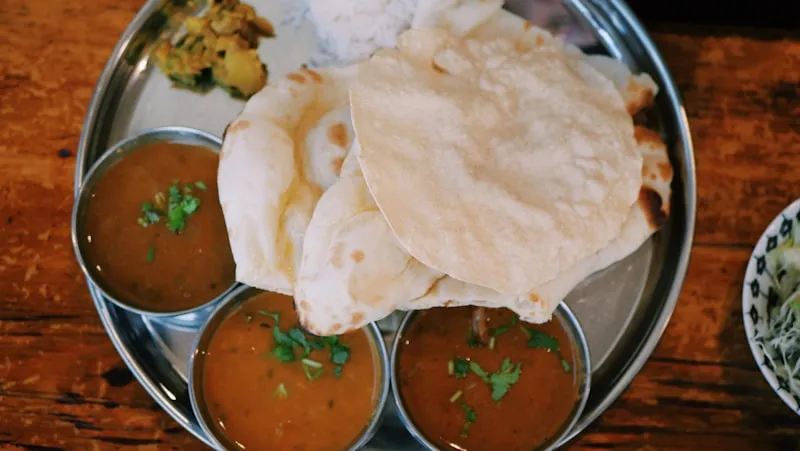
Old Delhi—The Ancestral Archive: Chandni Chowk is not merely a market with food stalls; it is a functioning, living, continuously operating culinary museum that is older than the United States of America. The lane-based specialization system—Paranthe Wali Gali for stuffed parathas since the 1870s, Dariba Kalan for rabri-faluda, the Jama Masjid quarter for nihari and seekh kebabs, Khari Baoli for spices in quantities that supply entire cities—represents a food production ecosystem that has been refined, generation by generation, for over three centuries. Karim's, established in 1913 by descendants of cooks who served the Mughal imperial kitchen, serves mutton burrah that tastes exactly the way it was designed to taste a century ago. The recipes are not "traditional" in the sanitized, commercial sense; they are literally ancestral, maintained through oral and practical transmission across five or six generations of the same family.
Lucknow—The Aristocratic Kitchen: If Old Delhi is the street-food capital, Lucknow is its refined, aristocratic counterpoint. Awadhi cuisine was not developed to feed the masses; it was engineered to impress Mughal nobility, and every dish carries that genetic heritage of deliberate, almost obsessive complexity. The galouti kebab at Tunday Kebabi—a minced meat preparation so extraordinarily tender that it was allegedly created for a toothless Nawab—uses a spice blend containing over 150 individually sourced ingredients. The dum pukht biryani technique (slow cooking sealed with dough in a heavy-bottomed pot over minimal heat) produces a result that no quick-cook method can replicate. Lucknowi bread crafts—sheermal (saffron-infused flatbread), taftan (leavened oven bread), and warqi paratha (flaky, layered)—are technical achievements that require years of apprenticeship to master and seconds to consume.
Kolkata—The Underrated Genius: Bengali cuisine remains, inexplicably, India's most underappreciated culinary tradition outside of Bengal itself. This is a cuisine that treats fish with the reverence that other cultures reserve for ceremonial occasions. Hilsa fish—marinated in mustard paste, wrapped in banana leaf, and steamed—is not merely a dish; it is a cultural artifact, a seasonal obsession, a source of genuine emotional intensity. The preparation of shorshe ilish (hilsa in mustard sauce) during the monsoon season triggers a form of collective euphoria across Bengal that visitors find simultaneously baffling and infectious. Bengali sweets—rosogolla, sandesh, mishti doi—are not "desserts" in the Western sense; they are independent culinary art forms with dedicated artisan lineages, seasonal variations, and technical standards that would satisfy a Michelin inspector.
Kerala and Tamil Nadu—The Spice Coast: South Indian food tourism is experiencing a dramatic surge, driven by international recognition of what South Indians have always known: this is some of the most technically sophisticated, flavor-dense food on the planet. Kerala's toddy shop cuisine—fresh-caught fish curry eaten with tapioca alongside a glass of fermented palm toddy in a thatched-roof establishment surrounded by coconut palms—is an experience that no restaurant in London or New York can replicate regardless of budget. Chettinad cuisine from Tamil Nadu deploys a spice complexity that is genuinely formidable—dried flowers, star anise, stone flower, kalpasi, marathi mokku—ingredients that most Western chefs have never encountered, combined in proportions that have been refined over centuries by the merchant Nattukotai Chettiars. The Kerala sadya—a vegetarian feast of 26-30 dishes served on a banana leaf during Onam festival—is a singular gastronomic experience that converts confirmed carnivores into temporary, bewildered vegetarians.
Rajasthan and Gujarat—The Vegetarian Masterclass: Global food culture has a persistent, deeply mistaken bias: that vegetarian cuisine is inherently limited, an exercise in deprivation or substitution. Rajasthani and Gujarati culinary traditions demolish this assumption with such comprehensive authority that the argument simply evaporates upon contact with reality. Rajasthani dal-baati-churma—a three-component dish where hard wheat balls are baked in desert sand ovens, crumbled into ghee-sweetened churma, and eaten with slow-simmered five-lentil dal—is a dish born from desert survival constraints that became a genuinely magnificent culinary achievement. Gujarat's thali tradition—a single meal comprising thirty to forty individual preparations spanning sweet, salt, sour, bitter, astringent, and spicy flavor profiles—represents a philosophical approach to eating that values completeness, balance, and variety above all else.
The New Food Tourism Infrastructure
The most significant structural development in Indian food tourism is the professionalization and systematization of what was previously an entirely informal, word-of-mouth experience. Organized food walks—guided walking tours through specific neighborhoods led by local culinary experts who provide historical context, ensure hygiene standards, and navigate the overwhelming complexity of street food environments—have become mainstream in every major Indian city.
In Delhi alone, platforms like Delhi Food Walks, Gully Tours, Reality Tours, and Masterji Kee Haveli offer curated street food itineraries that combine eating with storytelling. The format works because it solves the tourist's three existential anxieties simultaneously: where to eat (the guide knows), what to order (the guide orders), and whether it is safe (the guide has vetted every vendor). A well-designed food walk transforms what would otherwise be a chaotic, potentially overwhelming, possibly stomach-churning adventure into a structured, educational, deeply pleasurable experience.
Farm-to-table experiences are emerging as the premium segment of Indian food tourism. In Kodaikanal, Coorg, Munnar, and parts of Northeast India, boutique homestays now offer immersive culinary programs where guests harvest vegetables from kitchen gardens, visit spice plantations to understand the raw materials, grind masalas using traditional stone implements, and cook regional dishes under the guidance of local home cooks. These experiences provide a depth of understanding—of ingredients, technique, cultural context, and ecological sustainability—that no restaurant meal, however excellent, can approximate.
The Economic Architecture: Why Food Tourism Matters
Food tourism generates an economic distribution pattern that is fundamentally different from—and profoundly more equitable than—conventional tourism. When a tourist stays at a five-star international hotel chain, a significant percentage of their spending flows out of the local economy—to corporate headquarters in another country, to imported furnishings, to internationally sourced ingredients, to management contracts held by offshore companies. When a tourist eats a ₹50 plate of chole bhature from a street vendor in Chandni Chowk, essentially 100% of that spending remains in the hyper-local economy: the vendor's family income, the local flour supplier, the neighborhood spice merchant, the cooking gas distributor.
Food tourism supports precisely the kind of distributed, ground-level economic activity that India's development model most urgently needs. It creates income opportunities for small entrepreneurs, family-run establishments, and artisan food producers who would never benefit from the construction of another luxury resort or international conference center. It incentivizes the preservation of traditional culinary knowledge that is otherwise at genuine risk of disappearing as urbanization, processed food, and homogenized restaurant chains erode regional food traditions.
Frequently Asked Questions (FAQs)
Is Indian street food safe for foreign tourists to eat?
This is the single most asked question in Indian food tourism, and the honest answer is: it depends entirely on which vendor, in what conditions, and how your individual digestive system responds. The safest approach for first-time visitors is to join organized food walks led by experienced local guides who have longstanding relationships with specific vendors and can identify the stalls with the highest hygiene standards and freshest ingredients. General principles: eat at stalls with high customer turnover (food doesn't sit around), avoid pre-cut fruit from street carts, drink only sealed bottled water, and start with cooked (rather than raw) dishes to allow your gut microbiome to gradually adjust. Most seasoned food tourists report that digestive issues, when they occur, are temporary and the culinary rewards massively outweigh the transient discomfort.
What is the single best city in India for a first-time food tourist?
Old Delhi (specifically the Chandni Chowk-Jama Masjid corridor), without hesitation. The density of historically significant food establishments within walking distance, the extreme variety of styles (Mughal kebabs, Hindu vegetarian chaat, Partition-era Bengali sweets, centuries-old Jain mithai shops), and the sheer sensory intensity of the experience make it the most concentrated food tourism destination in the country. A single day of serious eating in Old Delhi will fundamentally, permanently recalibrate your understanding of what "Indian food" actually encompasses.
How is social media affecting traditional Indian food establishments?
The impact is double-edged and deeply complicated. Instagram and YouTube food influencers have brought unprecedented visibility to establishments that previously survived on purely local, generational reputation—a tiny jalebi shop that has operated for eighty years might suddenly face crowds of hundreds after a viral reel. This brings welcome revenue but also creates pressure: some establishments are modifying their recipes or presentations for "Instagram-worthiness," prioritizing visual spectacle over the subtle, unglamorous flavors that made them exceptional. The most resilient establishments—Karim's in Delhi, Tunday Kebabi in Lucknow, Mavalli Tiffin Room in Bangalore—have survived precisely by refusing to change, treating social media attention as a pleasant side effect rather than a business strategy.

Comments (1)
Good to have these kind of articles.