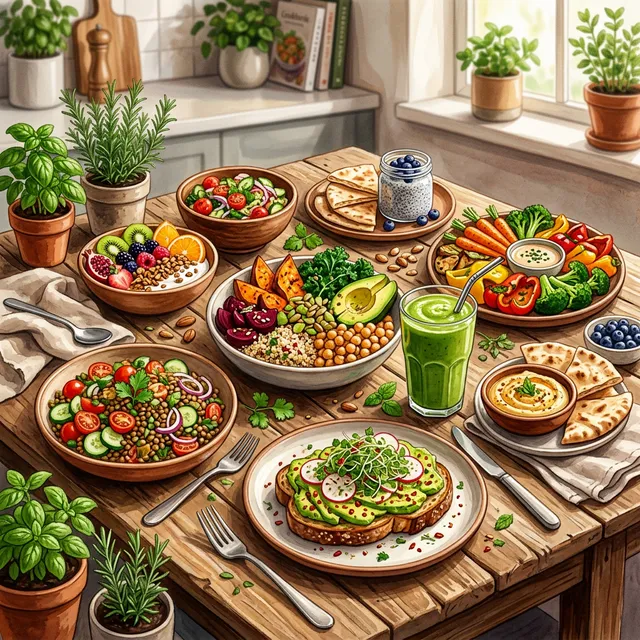
I stopped eating meat on January 1st, 2025. Not because of a documentary that made me cry, not because a vegan friend finally wore me down with moral arguments, and not because a doctor told me I had to. I stopped because I was curious—genuinely, experimentally curious—about what would happen to my body, my cooking, my relationship with food, and my monthly grocery bill if I removed the ingredient that had been the structural centre of virtually every meal I had eaten for thirty-three years. The experiment was intended to last one month. It lasted twelve. What I learned in those twelve months was simultaneously less dramatic than the plant-based advocacy community promises and more interesting than I expected.
The first thing I should acknowledge is the limitation of my experience as evidence. I am one person. My body, my metabolism, my microbiome, my genetic predispositions, my baseline dietary patterns, and my access to food options are specific to me and not generalisable to "everyone." The plant-based advocates who claim that removing meat will revolutionise your health, energy, skin, mood, athletic performance, and spiritual consciousness are making claims that the evidence does not support for all people in all circumstances. The meat-industry defenders who claim that plant-based diets are nutritionally inadequate and medically dangerous are equally wrong. The truth, unsurprisingly, is contextual and complicated.
Month 1-3: The Adjustment Period Nobody Warns You About

The first two weeks were characterised by a gnawing, persistent hunger that no volume of food seemed to satisfy. I was eating plenty—large portions of rice, dal, vegetables, bread, beans, fruits, nuts—but my body, accustomed to the caloric density and satiation signals of meat and dairy, was producing hunger sensations that I retrospectively understand as a recalibration process rather than genuine nutritional need. The satiety hormones (leptin, cholecystokinin, peptide YY) that signal "you have eaten enough" respond differently to plant proteins, fibre, and fats than to animal proteins and fats. During the adjustment period, my body's satiety calibration was essentially resetting itself, and the interim experience was two weeks of feeling hungry thirty minutes after meals that should have been objectively sufficient.
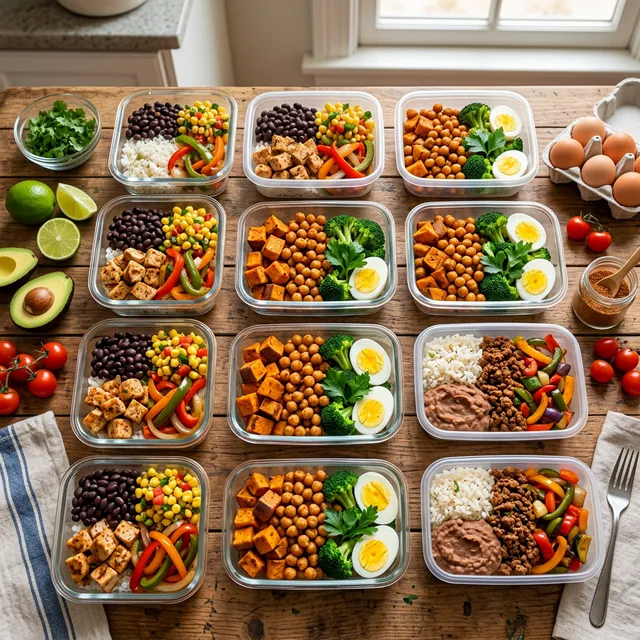
The hunger resolved by week three, replaced by a more interesting discovery: I was learning to eat differently, not merely to eat different things. Meat-centric meals are structurally simple: protein centre, starch side, vegetable garnish. Plant-based meals, when done well, are structurally distributed: multiple components contributing protein (lentils, chickpeas, tofu, tempeh, nuts, seeds), multiple components contributing flavour (spices, herbs, fermented condiments, roasted vegetables), and a starch base that is itself a food rather than a blank canvas (brown rice, millet, quinoa, sourdough). The shift from "how do I replace chicken in this dish?" to "what principles govern a satisfying plant-based meal?" took approximately three months and fundamentally changed my cooking.
Indian cuisine made this transition dramatically easier than it would have been otherwise. The Indian vegetarian tradition is not a subset of Indian meat cuisine with the meat removed—it is a fully developed, thousands-of-years-old culinary system with its own protein sources (an extraordinary variety of dals, paneer, curd preparations), its own flavour architecture (spice combinations designed for vegetarian ingredients), and its own meal structures (the thali system, where balance is achieved across multiple small dishes rather than within a single plate). A South Indian meal of sambar, rasam, poriyal, kootu, curd rice, and pickle is nutritionally complete, deeply satisfying, and entirely plant-based without any sense of deprivation. I was not inventing a new way of eating; I was reconnecting with a dietary tradition that my own culture had developed to extraordinary sophistication.
What Changed Physically (And What Didn't)
What changed: Digestion improved noticeably. The bloating and heaviness that I had accepted as normal after meals diminished significantly by month two—likely a function of increased dietary fibre (I went from approximately 15g/day to 40g/day) and reduced saturated fat intake. Energy levels became more stable throughout the day—the post-lunch energy crash that had been a daily fixture largely disappeared, replaced by a more consistent energy curve without dramatic peaks and troughs. Weight decreased modestly (approximately 4 kg over twelve months) without any deliberate caloric restriction—a predictable consequence of replacing calorie-dense meat and dairy with calorie-moderate plant foods. Cholesterol numbers improved: total cholesterol dropped from 215 to 178, LDL from 140 to 105, in a blood test at month nine. This cardiovascular improvement is the most robustly supported health benefit of plant-based diets in the nutritional literature.
What didn't change: My energy for exercise did not noticeably increase or decrease—the "boundless energy" promised by plant-based advocates did not materialise, nor did the "muscle-wasting weakness" threatened by plant-based skeptics. My skin did not transform. My sleep did not improve. My mood did not elevate. These non-changes are, in their own way, informative: they suggest that the claims of dramatic systemic health transformation from dietary change are overstated for people who were already eating a reasonably balanced diet before the transition. The changes I experienced were real, measurable, and positive—but they were specific (digestive, cardiovascular) rather than systemic.
The Social Dimension: What Nobody Discusses Enough
The most challenging aspect of plant-based eating in India is not nutritional—it is social. Indian food culture is communally oriented: meals are shared, food is offered as hospitality, and declining food—particularly food prepared specifically for you—carries interpersonal weight that purely nutritional discussions ignore entirely. When your grandmother makes her signature mutton biryani for your visit and you announce that you no longer eat meat, the nutritional calculus ("I can get adequate protein from dal and paneer") is entirely beside the point. The emotional calculus—the love expressed through food preparation, the rejection implied by food refusal, the generational expectation that food traditions will be continued—is the actual terrain, and no amount of nutritional science provides guidance for navigating it.
Eating out in India is substantially easier for vegetarians than in most countries—Indian restaurants universally offer extensive vegetarian menus, and in many South Indian and Gujarati restaurants, the entire menu is vegetarian. The challenge arises at social meals (weddings, festivals, family gatherings) where meat dishes are central and declining them requires either explanation (tedious), self-deprecation (annoying), or simply eating the vegetarian options without comment (the approach I found most effective, since it avoids the conversational spiral that any dietary announcement triggers in Indian social contexts).
The Nutritional Gaps: What You Actually Need to Supplement
Plant-based diets can provide all essential nutrients with two genuine exceptions and one conditional one. Vitamin B12 is not available in any natural plant food—it is produced by bacteria and concentrated in animal products. Supplementation is non-negotiable: 1000mcg of methylcobalamin daily or 2500mcg weekly. B12 deficiency causes irreversible neurological damage, and the timeline from depletion to symptoms is 2-5 years—long enough that newly plant-based individuals feel fine while their stores gradually deplete. This is the single most important supplementation advice for anyone eating plant-based, and it is the deficiency most likely to cause serious harm if ignored.
Omega-3 fatty acids (specifically DHA and EPA, the long-chain forms found in fish oil) are difficult to obtain in adequate amounts from plant sources. ALA (the plant-form omega-3 found in flaxseeds, chia seeds, walnuts) converts to DHA and EPA in the body, but the conversion rate is approximately 5-10%—meaning you would need to consume enormous quantities of ALA to achieve adequate DHA and EPA levels. A daily algae-based omega-3 supplement (250-500mg combined DHA+EPA) addresses this efficiently. Iron is conditionally concerning: plant-based iron (non-heme iron) is less bioavailable than animal-based iron (heme iron), and individuals with high iron requirements (menstruating women, athletes, pregnant women) should monitor iron levels through periodic blood tests and supplement if levels fall below normal ranges.
Frequently Asked Questions (FAQs)
Is a plant-based diet healthier than a diet that includes meat?
The evidence supports: a well-planned plant-based diet is associated with lower rates of cardiovascular disease, type 2 diabetes, and certain cancers compared to the average omnivorous diet. However, the comparison is between a well-planned plant-based diet and the average omnivorous diet—which, for most people, involves excessive processed meat, insufficient vegetables, and inadequate fibre. A well-planned omnivorous diet (moderate portions of lean, unprocessed meat, abundant vegetables, whole grains, and healthy fats) produces health outcomes comparable to a well-planned plant-based diet. The health advantage is not in eliminating meat per se but in the dietary pattern changes that typically accompany the transition: more vegetables, more fibre, less processed food, less saturated fat. You can achieve these changes without eliminating meat entirely.
Can I build muscle on a plant-based diet?
Yes. Plant-based protein sources—lentils, chickpeas, tofu, tempeh, seitan, edamame, black beans, quinoa—provide all essential amino acids when consumed in sufficient variety and quantity. The total protein requirement for muscle building is approximately 1.6-2.2 grams per kilogram of body weight per day, achievable through plant sources but requiring more deliberate meal planning than with animal proteins (which are more protein-dense per calorie). Many professional athletes (Formula 1 driver Lewis Hamilton, tennis player Novak Djokovic, ultramarathon runner Scott Jurek) perform at elite levels on plant-based diets. The key is adequate total protein intake and sufficient caloric intake—plant-based diets tend to be less calorie-dense, and undereating is the most common nutritional error among plant-based athletes.
Is going plant-based expensive?
In India, a plant-based diet is typically cheaper than a diet including meat. The staple protein sources—dal (₹80-150/kg), rajma (₹100-140/kg), chana (₹70-120/kg), tofu (₹60-80/200g), soya chunks (₹50-70/200g)—are substantially cheaper per gram of protein than chicken (₹180-280/kg), mutton (₹600-900/kg), or fish (₹250-500/kg). The "expensive" perception comes from processed plant-based alternatives (plant-based meat, vegan cheese, speciality milks) which are premium-priced products. A whole-food, plant-based diet centred on Indian staples—dal, rice, roti, vegetables, fruits, nuts, seeds—is one of the most affordable dietary patterns available.

Comments (0)
Be the first to share your thoughts on this article.